May lights triumph over darkness.
May peace transcend the earth.
May the spirit of light illuminate the world.
May the light that we celebrate at Diwali show us the way and lead us together on the path of peace and social harmony
“WISH U A VERY HAPPY DIWALI”
Showing posts with label Indian Festival. Show all posts
Showing posts with label Indian Festival. Show all posts
Diwali SMS-May lights triumph over darkness

Diwali SMS-Happy Diwali-A Fun Diwali Wish
A Fun Diwali Wish!
The Most Precious Gift…
Diwali Countdown!
Warm Diwali Friendship Ecard!
A Fun Diwali Wish!
Happy Diwali… Friend!
I Feel Lucky…
You Brighten My Diwali
"Happy Diwali"
IDD Mubrak- Happy ID-E-Milad

The Prophet was born on the twelfth day of Rabi-ul-Awwal, the third month of the Muslim year. His death anniversary also falls on the same day. The word ' barah ' stands for the twelve days of the Prophet's sickness. During these days, sermons are delivered in mosques by learned men, focusing on the life and noble deeds of the Prophet.
In some parts of the country, a ceremony known as sandal rite is performed over the symbolic footprints of the Prophet engraved in stone. A representation of 'buraq', a horse on which the Prophet is believed to have ascended to heaven, is kept near the footprints and anointed with sandal paste or scented powder, and the house and casket containing these are elaborately decorated. Elegies or 'marsiyas' are sung in memory of the last days of the Prophet. The twelfth day or the Urs proper is observed quietly, in prayers and alms-giving.
During these days, learned men deliver sermons in mosques, focussing on the life and noble deeds of the Prophet. In some parts of the country, a ceremony known as sandal rite is performed over the symbolic footprints of the Prophet engraved in stone. A representation of buraq, a horse on which the Prophet is believed to have ascended to heaven, is kept near the footprints and anointed with sandal paste or scented powder, and the house and casket containing these are elaborately decorated. Elegies or marsiyas are sung in memory of the last days of the Prophet. The twelfth day or the urs is observed quietly, in prayers and alms-giving.
Muhammad, son of Abdullah, son of Abdul Muttalib, of the tribe of Qureysh, was born at Mecca about 570 A.D., 53 years before the Hijrah. For some time Muhammad was at the service of a wealthy widow, named Khadijah. This resulted in their marriage which proved a very happy one, though she was fifteen years older than he. For 26 years they remained together and after her death Muhammad took other wives.
From about 610 A.D. Muhammad began to receive, as he believed, revelations sent down from Allah through the angel Gabriel. A small community was gathered, but they were persecuted by the Meccans. So in 622 A.D. Muhammad with his followers immigrated to Medina. Here he was no longer the leader of a religious minority, but the ruler of the city. This flight from Mecca to Medina is known as Hijrah and marks the beginning of the Islamic era. More and more Arabian tribes accepted Islam as their religion and Muhammad as ruler, until 630 A.D. when even the Meccans submitted. In 632 A.D. Muhammad led the pilgrimage to Mecca, preached his farewell sermon and died soon after.
Navratri means Nine (Nav) Nights (Ratri)
 Navratri means Nine (Nav) Nights (Ratri). Navratri or the Festival of Nine Nights from Ashvin Sud 1 to 9 is devoted to the propitiation of Shakti or Divine Mother. She represents prakriti, counterpart of purusha jointly making possible the creation of the world according to the religious ideology of Goddess worship. Such worships were prevalent in India even before the advent of the Aryans, who adopted it as a religious practice. References in vedas and puranas confirm this opinion. The main temples of mother goddess that are visited by multitude of devotees during Navratri are the shaktipithas, of which there are three in Gujarat. It is believed that Lord Vishnu had to cut the body of Sati into pieces to stop the destruction by Shiva who was perturbed by her death. At fifty-two places these pieces fell, the three in Gujarat being; Ambaji in Banaskantha, Bahucharaji in Chunaval and Kalika on Pavagadh hill in Panchmahals.
This festival is essentially religious in nature. It is celebrated with true devotion in the various temples dedicated to the Mother, or Mataji, as she is familiarly called. In some homes, images of the Mother are worshipped in accordance with accepted practice. This is also true of the temples, which usually have a constant stream of visitors from morning to night.
Wishing u happy Eid-Eid Mubarak
Wishing u happy Eid, soft as silk, white as milk, sweet as honey, full of money and bubli as u.
Wishing u happy Eid
Eid Mubarak-May Allah this occasion flood your life with happiness
May Allah this occasion flood your life with happiness,
Your heart with love, Your soul with spirtual,
Your mind with wisdom,
wishing You a very Happy Eid.
"Eid Mubarik"
Eid Ul Adha is Eid of sacrifice-Happy Eid SMS
Eid ul adha is eid of sacrifice, and commitment to Allahs orders,
May Allah bless us with the same in all circles of life,
and help all amongst us,
who r helpless,worried, and waiting for his rehmat, Ameen.
"Eid Mubarak"
Happy Eid- Eid Mubarak
Jab kabi bin mange app per khushion ki bersaat ho,
jab kabi appka dil anjaani khushi se betaab ho,
to samaj lena koi aap ko duaon main yaad ker raha hai.
Happy Eid Day
What makes you feel proud of being an Indian?
What makes you feel proud of being an Indian?
Come on lets share your thought.
We can harp about inflation. Worry about instability at the Centre. Cry about terrorism. And condemn corruption. OR shout that we are big in Information Technology. Most of our professionals give foreigners a run for their money. Despite all opposition we still maintain our stance on Nuclear deal. As Indians we have many reasons to crib and even more to be proud of our country. What's your choice? What makes you a proud Indian?
Happy Independence Day!
Freedom is not Right but a Feeling- Happy Independence Day
Happy Independence Day
Freedom is not Right but a Feeling!
Let`s be proud to feel the Freedom!
Let`s say loud we are INDIANS!!!
Let all of us get to-gather and
Let`s Celebrate Our Freedom!
Jai Hind!
What does freedom mean for you in the current context?
India is fast approaching its 61st Independence Day. It will pass of as just another day for some and some of us might give a thought to what it means for us. Freedom can mean differently to all of us. From quitting your job to taking a sabbatical. From raising your voice against an issue which has been dragging for some time to letting go and relaxing? We are for sure grateful to the freedom fighters who have got this priceless independence. But the meaning of freedom has changed since then. What does freedom mean for you?
15 August Independence Day Celebration in India
August 15, Independence Day, is celebrated in a mood of abandon and joy - no rituals, just festivities. It is also a national holiday, with educational institutions, private and government organisations remaining closed, but for official celebrations in the morning.
Schools and colleges mark the day with cultural activities, drills, flag hoisting and distribution of sweets. Government as well as private organisations celebrate it similarly.
Families and friends get together for lunch or dinner, or for an outing. Housing colonies, cultural centres, clubs and societies hold entertainment programmes and competitions, usually based on the freedom theme.
The Prime Minister sets the mood by hoisting the national flag and addressing the nation from the Red Fort, the historical monument in Delhi. This is accompanied by a march-past of the armed and police forces. Similar ceremonies are held in all the state capitals. The Prime Minister's address and the march-past are relayed live on national television.
In cities, one sees a sudden burst of saffron, green and white, the Indian tri-colour. The media goes to town with a variety of contests, promotions and programmes related to Indian independence. Television channels show patriotic movies and relentlessly play patriotic songs from old and new Hindi movies. Billboards on roadsides for different brands pay their tribute to the nation.
Everyone seems to have something going for them. Shops and petty tradesmen sell a range of Independence Day merchandise such as flags, stickers, tee-shirts and greeting cards. Street urchins hawk paper and plastic flags and tri-coloured balloons to motorists at traffic signals.
Though a trifle commercial and jingoistic, what lies beneath the celebrations is the national spirit of gaiety, pride and hope for a better future. A spirit and hope that is renewed each year.
Schools and colleges mark the day with cultural activities, drills, flag hoisting and distribution of sweets. Government as well as private organisations celebrate it similarly.
Families and friends get together for lunch or dinner, or for an outing. Housing colonies, cultural centres, clubs and societies hold entertainment programmes and competitions, usually based on the freedom theme.
The Prime Minister sets the mood by hoisting the national flag and addressing the nation from the Red Fort, the historical monument in Delhi. This is accompanied by a march-past of the armed and police forces. Similar ceremonies are held in all the state capitals. The Prime Minister's address and the march-past are relayed live on national television.
In cities, one sees a sudden burst of saffron, green and white, the Indian tri-colour. The media goes to town with a variety of contests, promotions and programmes related to Indian independence. Television channels show patriotic movies and relentlessly play patriotic songs from old and new Hindi movies. Billboards on roadsides for different brands pay their tribute to the nation.
Everyone seems to have something going for them. Shops and petty tradesmen sell a range of Independence Day merchandise such as flags, stickers, tee-shirts and greeting cards. Street urchins hawk paper and plastic flags and tri-coloured balloons to motorists at traffic signals.
Though a trifle commercial and jingoistic, what lies beneath the celebrations is the national spirit of gaiety, pride and hope for a better future. A spirit and hope that is renewed each year.
History of Indian Independence Day
At the stroke of midnight, as India moved into August 15, 1947, Jawaharlal Nehru, India's first Prime Minister, read out the famous speech proclaiming India's independence.
The moment ended three centuries of British colonial rule. The land was no longer the summer retreat of British sahibs who fancied spices, shikar, elephants and snake-charmers.
Independence was also the end of nearly a century of struggle for freedom, battles, betrayals and sacrifices. It also created a situation where we were responsible for ourselves.
But it wasn't a period of unqualified joy. For a lot of people, in spite of a new era promised by independence, partition was a painful reality and so was the bloodshed that accompanied it. That was 53 years ago. Much has changed; the struggle for freedom lives on in history books and memoirs, and on the tombstones of valiant martyrs. Politics has undergone a personality change from fiery idealism to a pragmatic cynicism. Karma drives the nation on its way forward, and population has crossed the billion mark.
But, come August 15, and the people put their troubles behind them for a while, as they stand up as a nation for the National Anthem. Along with the soaring cadences of the anthem, the hopes and dreams for a better tomorrow are renewed in political speeches and replays of the deeds of those who earned us our freedom.
Independence Day is an occasion to rejoice in our freedom and to pay collective homage to all those people who sacrificed their lives to the cause. But it is more than that. It also marks the coming together of more than 400 princely states into one nation - India. This was probably our biggest diplomatic success.
Each year, August 15 gives us the reason to celebrate all this, and do much more - it is a time to contemplate what we have and how we achieved it.
Though India had no dearth of religious and community festivals, there was, till Independence, no true national festival that the whole country could partake of. Independence Day, beginning as a day to commemorate the greatest moment in Indian history, has now come to signify a feeling of nationalism, solidarity and celebration.
Independence Day remained the sole national festival till India declared itself a republic in 1950. On January 26, 1950, Republic Day became the second Indian national holiday.
Background to the freedom struggle
Before the 18th century, India's relationship with the West had been predominantly trade-related. All this changed when the forces of the East India Company defeated Siraj-ud-Daulah, the Nawab of Calcutta.
That signalled the arrival of the British as rulers. Till the Sepoy Mutiny of 1857, the East India Company, with the Governor General as its head, ruled the subcontinent. After that, the Crown took over the administration, with the Viceroy as its representative.
In the 20th century, the country witnessed the rise of many leaders such as Gopal Krishna Gokhale, Jawaharlal Nehru and Sardar Vallabhbhai Patel. Banded under the leadership of Mahatma Gandhi and his doctrine of non-violence, the freedom struggle moved ahead with new vigour. Milestones like the Quit India Movement, Non-Cooperation Movement, Khilafat Movement and Gandhi's Dandi March brought the inevitable freedom closer.
The moment ended three centuries of British colonial rule. The land was no longer the summer retreat of British sahibs who fancied spices, shikar, elephants and snake-charmers.
Independence was also the end of nearly a century of struggle for freedom, battles, betrayals and sacrifices. It also created a situation where we were responsible for ourselves.
But it wasn't a period of unqualified joy. For a lot of people, in spite of a new era promised by independence, partition was a painful reality and so was the bloodshed that accompanied it. That was 53 years ago. Much has changed; the struggle for freedom lives on in history books and memoirs, and on the tombstones of valiant martyrs. Politics has undergone a personality change from fiery idealism to a pragmatic cynicism. Karma drives the nation on its way forward, and population has crossed the billion mark.
But, come August 15, and the people put their troubles behind them for a while, as they stand up as a nation for the National Anthem. Along with the soaring cadences of the anthem, the hopes and dreams for a better tomorrow are renewed in political speeches and replays of the deeds of those who earned us our freedom.
Independence Day is an occasion to rejoice in our freedom and to pay collective homage to all those people who sacrificed their lives to the cause. But it is more than that. It also marks the coming together of more than 400 princely states into one nation - India. This was probably our biggest diplomatic success.
Each year, August 15 gives us the reason to celebrate all this, and do much more - it is a time to contemplate what we have and how we achieved it.
Though India had no dearth of religious and community festivals, there was, till Independence, no true national festival that the whole country could partake of. Independence Day, beginning as a day to commemorate the greatest moment in Indian history, has now come to signify a feeling of nationalism, solidarity and celebration.
Independence Day remained the sole national festival till India declared itself a republic in 1950. On January 26, 1950, Republic Day became the second Indian national holiday.
Background to the freedom struggle
Before the 18th century, India's relationship with the West had been predominantly trade-related. All this changed when the forces of the East India Company defeated Siraj-ud-Daulah, the Nawab of Calcutta.
That signalled the arrival of the British as rulers. Till the Sepoy Mutiny of 1857, the East India Company, with the Governor General as its head, ruled the subcontinent. After that, the Crown took over the administration, with the Viceroy as its representative.
In the 20th century, the country witnessed the rise of many leaders such as Gopal Krishna Gokhale, Jawaharlal Nehru and Sardar Vallabhbhai Patel. Banded under the leadership of Mahatma Gandhi and his doctrine of non-violence, the freedom struggle moved ahead with new vigour. Milestones like the Quit India Movement, Non-Cooperation Movement, Khilafat Movement and Gandhi's Dandi March brought the inevitable freedom closer.
61 Independence Day Of India

 Independence Day, August 15, commemorates the day in 1947 when India achieved freedom from British rule. It is celebrated with flag hoisting ceremonies and cultural programs in the state capitals. The Prime Minister's speech at the Red Fort in Delhi is the major highlight.
All Government Organisations have a holiday as 15th August is a National holiday . In the capital New Delhi most of the Government Offices are lit up. In all the cities around the
 country the Flag Hoisting Ceremony is done by politicians belonging to that constituency. In various private organisations the Flag Hoisting Ceremony is carried out by a Senior officer of that organisation.
On Television, various Independence related programs are telecasted, reminding us of the hard times faced by the freedom fighters. In almost all the schools and
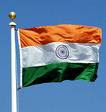 colleges around the country, no academic work in done on this day, but all the students and staff members are present on this day and there is a sort of gathering of the entire school/college within their respective premises and the flag hoisting ceremony takes place,(usually in the presence of the principal)and singing of the National Anthem. After this there are various cultural activities held in the school / college and the celebration continues till late evening.
Phagun ke rangon se ranglo apni zindagi, Happy holi
Phagun ke rangon se ranglo apni zindagi...
Holi laye tumhare liye Muskurahat aur dher sari khushi!
HOLI HAI, HAPPY HOLI

Holi mai tum karo Total masti, Aur tumko mile sabka pyar or Dosti. Happy Holi
Holi mai tum karo Total masti...
Aur tumko mile sabka pyar or Dosti...
HAPPY HOLI

Khusiyan ho overflow, Fun Kabhi na ho low, Happi Holi, Holi hai
Khusiyan ho overflow, Fun Kabhi na ho low..........
Happy Holi

Happy Holi to all of you... Holi hai, Holi mubarak

Hiiiii ….happy holi 2 all of u !!!!!
Happy Holi To u In advance
Happy Holi To u In advance

Subscribe to:
Posts (Atom)
 tarandeep