Showing posts with label Independence. Show all posts

What makes you feel proud of being an Indian?


What makes you feel proud of being an Indian?

Come on lets share your thought.

We can harp about inflation. Worry about instability at the Centre. Cry about terrorism. And condemn corruption. OR shout that we are big in Information Technology. Most of our professionals give foreigners a run for their money. Despite all opposition we still maintain our stance on Nuclear deal. As Indians we have many reasons to crib and even more to be proud of our country. What's your choice? What makes you a proud Indian?


Happy Independence Day!


Freedom is not Right but a Feeling- Happy Independence Day

Happy Independence Day

Freedom is not Right but a Feeling!
Let`s be proud to feel the Freedom!
Let`s say loud we are INDIANS!!!
Let all of us get to-gather and
Let`s Celebrate Our Freedom!
Jai Hind!

What does freedom mean for you in the current context?

India is fast approaching its 61st Independence Day. It will pass of as just another day for some and some of us might give a thought to what it means for us. Freedom can mean differently to all of us. From quitting your job to taking a sabbatical. From raising your voice against an issue which has been dragging for some time to letting go and relaxing? We are for sure grateful to the freedom fighters who have got this priceless independence. But the meaning of freedom has changed since then. What does freedom mean for you?

15 August Independence Day Celebration in India

August 15, Independence Day, is celebrated in a mood of abandon and joy - no rituals, just festivities. It is also a national holiday, with educational institutions, private and government organisations remaining closed, but for official celebrations in the morning.

Schools and colleges mark the day with cultural activities, drills, flag hoisting and distribution of sweets. Government as well as private organisations celebrate it similarly.

Families and friends get together for lunch or dinner, or for an outing. Housing colonies, cultural centres, clubs and societies hold entertainment programmes and competitions, usually based on the freedom theme.

The Prime Minister sets the mood by hoisting the national flag and addressing the nation from the Red Fort, the historical monument in Delhi. This is accompanied by a march-past of the armed and police forces. Similar ceremonies are held in all the state capitals. The Prime Minister's address and the march-past are relayed live on national television.

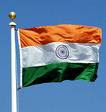
In cities, one sees a sudden burst of saffron, green and white, the Indian tri-colour. The media goes to town with a variety of contests, promotions and programmes related to Indian independence. Television channels show patriotic movies and relentlessly play patriotic songs from old and new Hindi movies. Billboards on roadsides for different brands pay their tribute to the nation.

Everyone seems to have something going for them. Shops and petty tradesmen sell a range of Independence Day merchandise such as flags, stickers, tee-shirts and greeting cards. Street urchins hawk paper and plastic flags and tri-coloured balloons to motorists at traffic signals.

Though a trifle commercial and jingoistic, what lies beneath the celebrations is the national spirit of gaiety, pride and hope for a better future. A spirit and hope that is renewed each year.

History of Indian Independence Day

At the stroke of midnight, as India moved into August 15, 1947, Jawaharlal Nehru, India's first Prime Minister, read out the famous speech proclaiming India's independence.

The moment ended three centuries of British colonial rule. The land was no longer the summer retreat of British sahibs who fancied spices, shikar, elephants and snake-charmers.

Independence was also the end of nearly a century of struggle for freedom, battles, betrayals and sacrifices. It also created a situation where we were responsible for ourselves.

But it wasn't a period of unqualified joy. For a lot of people, in spite of a new era promised by independence, partition was a painful reality and so was the bloodshed that accompanied it. That was 53 years ago. Much has changed; the struggle for freedom lives on in history books and memoirs, and on the tombstones of valiant martyrs. Politics has undergone a personality change from fiery idealism to a pragmatic cynicism. Karma drives the nation on its way forward, and population has crossed the billion mark.

But, come August 15, and the people put their troubles behind them for a while, as they stand up as a nation for the National Anthem. Along with the soaring cadences of the anthem, the hopes and dreams for a better tomorrow are renewed in political speeches and replays of the deeds of those who earned us our freedom.

Independence Day is an occasion to rejoice in our freedom and to pay collective homage to all those people who sacrificed their lives to the cause. But it is more than that. It also marks the coming together of more than 400 princely states into one nation - India. This was probably our biggest diplomatic success.

Each year, August 15 gives us the reason to celebrate all this, and do much more - it is a time to contemplate what we have and how we achieved it.

Though India had no dearth of religious and community festivals, there was, till Independence, no true national festival that the whole country could partake of. Independence Day, beginning as a day to commemorate the greatest moment in Indian history, has now come to signify a feeling of nationalism, solidarity and celebration.

Independence Day remained the sole national festival till India declared itself a republic in 1950. On January 26, 1950, Republic Day became the second Indian national holiday.

Background to the freedom struggle

Before the 18th century, India's relationship with the West had been predominantly trade-related. All this changed when the forces of the East India Company defeated Siraj-ud-Daulah, the Nawab of Calcutta.

That signalled the arrival of the British as rulers. Till the Sepoy Mutiny of 1857, the East India Company, with the Governor General as its head, ruled the subcontinent. After that, the Crown took over the administration, with the Viceroy as its representative.

In the 20th century, the country witnessed the rise of many leaders such as Gopal Krishna Gokhale, Jawaharlal Nehru and Sardar Vallabhbhai Patel. Banded under the leadership of Mahatma Gandhi and his doctrine of non-violence, the freedom struggle moved ahead with new vigour. Milestones like the Quit India Movement, Non-Cooperation Movement, Khilafat Movement and Gandhi's Dandi March brought the inevitable freedom closer.

61 Independence Day Of India

Independence Day

Independence DayIndependence Day, August 15, commemorates the day in 1947 when India achieved freedom from British rule. It is celebrated with flag hoisting ceremonies and cultural programs in the state capitals. The Prime Minister's speech at the Red Fort in Delhi is the major highlight.


All Government Organisations have a holiday as 15th August is a National holiday . In the capital New Delhi most of the Government Offices are lit up. In all the cities around the
Independence Day country the Flag Hoisting Ceremony is done by politicians belonging to that constituency. In various private organisations the Flag Hoisting Ceremony is carried out by a Senior officer of that organisation.

On Television, various Independence related programs are telecasted, reminding us of the hard times faced by the freedom fighters.
In almost all the schools and
Independence Daycolleges around the country, no academic work in done on this day, but all the students and staff members are present on this day and there is a sort of gathering of the entire school/college within their respective premises and the flag hoisting ceremony takes place,(usually in the presence of the principal)and singing of the National Anthem. After this there are various cultural activities held in the school / college and the celebration continues till late evening.

Republic Day (26 January) Speech : Indian National Festival

26th January 1950 is one of the most important days in Indian history as it was on this day the constitution of India came into force and India became a truly sovereign state. In this day India became a totally republican unit. The country finally realized the dream of Mahatma Gandhi and the numerous freedom fighters who, fought for and sacrificed their lives for the Independence of their country. So, the 26th of January was decreed a national holiday and has been recognized and celebrated as the Republic Day of India, ever since.

Today, the Republic Day is celebrated with much enthusiasm all over the country and especially in the capital, New Delhi where the celebrations start with the Presidential to the nation. The beginning of the occasion is always a solemn reminder of the sacrifice of the martyrs who died for the country in the freedom movement and the succeeding wars for the defense of sovereignty of their country. Then, the President comes forward to award the medals of bravery to the people from the armed forces for their exceptional courage in the field and also the civilians, who have distinguished themselves by their different acts of valour in different situations.

To mark the importance of this occasion, every year a grand parade is held in the capital, from the Rajghat, along the Vijaypath. The different regiments of the army, the Navy and the Air force march past in all their finery and official decorations even the horses of the cavalry are attractively caparisoned to suit the occasion. The crème of N.C.C cadets, selected from all over the country consider it an honour to participate in this event, as do the school children from various schools in the capital. They spend many days preparing for the event and no expense is spared to see that every detail is taken care of, from their practice for the drills, the essential props and their uniforms.

The parade is followed by a pageant of spectacular displays from the different states of the country. These moving exhibits depict scenes of activities of people in those states and the music and songs of that particular state accompany each display. Each display brings out the diversity and richness of the culture of India and the whole show lends a festive air to the occasion. The parade and the ensuing pageantry is telecast by the National Television and is watched by millions of viewers in every corner of the country.

The patriotic fervor of the people on this day brings the whole country together even in her essential diversity. Every part of the country is represented in occasion, which makes the Republic Day the most popular of all the national holidays of India.

Sardar Bhagat Singh (1907 - 1931) Proud of INDIA

Sardar Bhagat Singh (1907 - 1931)

Family of Patriots

Bhagat Singh was born in a Sikh family of farmers in the village of Banga of Layalpur district of Punjab (now in Pakistan) on September 27th of 1907. His family stood for patriotism, reform, and freedom of the country. His grandfather Arjun Singh was drawn to Arya Samaj, a reformist movement of Hinduism, and took keen interest in proceedings of the Indian National Congress. Bhagat Singh's father Kishen Singh and uncle Ajit Singh were members of Ghadr Party founded in the U.S. in early years of this century to route British rule in India. Both were jailed for alleged anti-British activities. Ajit Singh had 22 cases against him and was forced to flee to Iran. Thereafter he went to Turkey, Austria, Germany and finally to Brazil to escape Black Water (Kalapani) punishment for his revolutionary activities in India.

The Jalianwala Bagh Massacre

Young Bhagat Singh was brought up in a politically charged state of Punjab which was left with a seething memory of the Jalianwala massacre of more than 400 innocent lives and thousands injured (1919). As a lad of fourteen he went to this spot to collect soil from the park of Jalianwala (bagh) in his lunch box, sanctified by the blood of the innocent and kept it as a memento for life.

Bhagat Singh was studying at the National College founded by Lala Lajpatrai, a great revolutionary leader and reformist. To avoid early marriage, he ran away from home and, became a member of the youth organization Noujawan Bharat Sabha which had memberships of all sects and religions. He met Chandrashekhar Azad, B.K. Dutt and other revolutionaries. They used to print handouts and newspapers in secret and spread political awareness in India through Urdu, Punjabi and English. These were all banned activities in India at the time, punishable with imprisonment.

The Simon Commission, Murder of Lala Lajpatrai and the Revenge

Anti-British feelings were spreading; Indians wanted some proper representation in running the administration of their country to which British reciprocated only on paper. Noticing restlessness was spreading, the British Government appointed a commission under the leadership of Sir John Simon in 1928, to report on political happenings. There was no single Indian member in this commission, and all the political parties decided to boycott the commission when it planned to visit major cities of India.

In Lahore, Lala Lajpatrai (picture) and Pandit Madan Mohan Malavia decided to protest to the commission in open about their displeasure. It was a silent protest march, yet the police chief Scott had banned meetings or processions. Thousands joined, without giving room for any untoward incident. Even then, Scott beat Lala Lajpatrai severely with a lathi (bamboo stick) on the head several times. Finally the leader succumbed to the injuries.

Bhagat Singh who was an eye witness to the morbid scene vowed to take revenge and with the help of Azad, Rajguru and Sukhadev plotted to kill Scott. Unfortunately he killed Mr. Sanders, a junior officer, in a case of mistaken identity. He had to flee from Lahore to escape death punishment.

Bomb in the Assembly

Instead of finding the root cause for discontent of Indians, the British government took to more repressive measures. Under the Defense of India Act, it gave more power to the police to arrest persons to stop processions with suspicious movements and actions. The act brought in the council was defeated by one vote. Even then it was to be passed in the form of an ordinance in the "interest of the public." No doubt the British were keen to arrest all leaders who opposed its arbitrary actions, and Bhagat Singh who was in hiding all this while, volunteered to throw a bomb in the central assembly where the meeting to pass the ordinance was being held. It was a carefully laid out plot, not to cause death or injury but to draw the attention of the government, that the modes of its suppression could no more be tolerated. It was agreed that Bhagat Singh and Batukeshwar Dutt would court arrest after throwing the bomb.

It was a forgone conclusion in 1929 April 8th at Delhi Central Assembly. Singh and Dutt threw handouts, and bombed in the corridor not to cause injury and courted arrest after shouting slogans Inquilab Zindabad (Long Live, Revolution!)

Meanwhile the killers of Sanders were identified by the treachery of Bhagat Singh's friends who became "Approvers." Bhagat Singh thought the court would be a proper venue to get publicity for the cause of freedom, and did not want to disown the crime. But he gave a fiery statement giving reasons for killing which was symbolic of freedom struggle. He wanted to be shot like a soldier, and not die at the gallows. But, his plea was rejected, and he was hanged on the 23rd of March 1931. He was 24.

Bhagat Singh became a legendary hero for the masses. Innumerable songs were composed about him, and the youth throughout the country made him their ideal. He became a symbol of bravery and a goal to free India.

Mahatma Gandhi on the Martyrdom of Bhagat Singh

Freedom fighter Sardar Bhagat Singh was hanged by the British on accusations of anti-government activities on March 23, 1931. Here, Gandhi pays tribute to the patriotism of the young martyr while disagreeing with his revolutionary methods. Excerpted from Gandhi's article in Young India.

Bhagat Singh and his two associates have been hanged. The Congress made many attempts to save their lives and the Government entertained many hopes of it, but all has been in a vain.
Bhagat Singh did not wish to live. He refused to apologize, or even file an appeal. Bhagat Singh was not a devotee of non-violence, but he did not subscribe to the religion of violence. He took to violence due to helplessness and to defend his homeland. In his last letter, Bhagat Singh wrote --" I have been arrested while waging a war. For me there can be no gallows. Put me into the mouth of a cannon and blow me off." These heroes had conquered the fear of death. Let us bow to them a thousand times for their heroism.
But we should not imitate their act. In our land of millions of destitute and crippled people, if we take to the practice of seeking justice through murder, there will be a terrifying situation. Our poor people will become victims of our atrocities. By making a dharma of violence, we shall be reaping the fruit of our own actions.

Hence, though we praise the courage of these brave men, we should never countenance their activities. Our dharma is to swallow our anger, abide by the discipline of non-violence and carry out our duty.
March 29, 1931